
Introduction
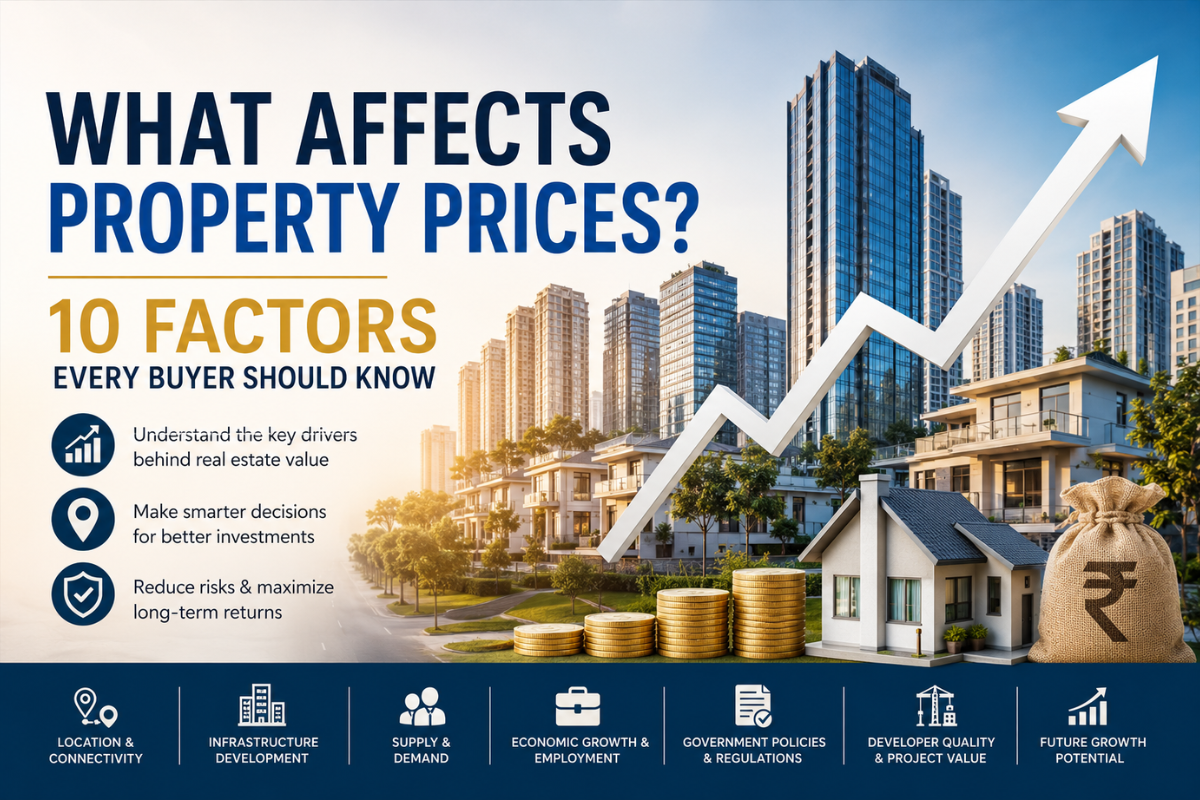
Despite a variety of quantifiable elements that normally affect real estate appreciation, many buyers believe property values go up randomly over time. The value of a property is influenced by infrastructure, demand of a buyer, supply of housing, government policies, economic growth, expansion of jobs and location maturity. Understanding these factors helps customers make better financial decisions instead of relying on market hype or short term trends.
Long-term growth variables typically exert more influence on a property’s future value than simple current pricing. This tutorial explains how real estate cycles work, what a buyer should look for before making an investment, and the primary factors affecting property prices in India. It aims to be a useful source of market knowledge, a framework for strategic purchasers and a guide to investment timing for smarter property decisions.
Why Understanding Property Price Drivers Matters Before Buying?
Avoid Overpaying
Buyers move property prices to tell if a project is priced appropriately by temporary hype or aggressive marketing.
Better Investment Timing
Real estate markets tend to cycle. Understanding what drives prices upward helps buyers find better entry positions before the big appreciation periods begin.
Long-Term Appreciation Logic
Infrastructure, connectivity, commercial growth and local demand all impact property values in different ways. Understanding these drivers enables long-term investment planning.
Market Cycle Awareness
Knowing how economic conditions, supply and demand and buyer mood impact pricing enables investors to avoid buying.
Risk Reduction
Buyers who analyze real estate by quantifiable growth indicators lower the likelihood of bad investment selections, weak resale demand and weak rental performance.
|Related Real Estate Market Cycles Explained: When to Buy & When to Wait|
Location and Connectivity
Metro Expansion
Demand is generally higher for homes along metro corridors because purchasers want to be closer to faster, less expensive methods to get to work each day. Metro links frequently enhance the long-term appreciation potential.
Expressways
The major expressways will make it more efficient to commute from the residential to the business zones. This will add appeal to the properties nearby, both for end users and investors.
Highways
National highways and arterial roads enhance regional connectivity, encourage commercial development and boost development activity in the vicinity of emerging real estate corridors.
Airport Access
The areas with greater airport connectivity attract corporate professionals and NRIs and luxury residential demand, especially in the metros.
Commercial Hubs
Properties located near IT parks, corporate centers and commercial areas are often considered to have higher occupancy levels, rental demand and long-term property worth appreciation.
Daily Convenience
The presence of schools, hospitals, retail malls, entertainment zones and other basic utilities plays a great role in the popularity of a residential area. Buyers will always pay a premium for locations that enhance day-to-day ease and lifestyle access.
Infrastructure Development
New Roads
Road expansion projects promote accessibility, reduce travel time and increase residential demand in emerging areas. Better connectivity frequently translates into faster property price growth.
Business Parks
Jobs created by corporate offices and industrial zones immediately raise the demand for housing in the surrounding locations.
Schools
As reputed educational institutions attract families for long-term residential stability and become more valuable.
Hospitals
Good healthcare infrastructure enhances buyer trust especially in large residential communities and premium urban areas.
Retail Growth
Shopping malls, entertainment zones, restaurants and lifestyle destinations make an area more attractive and help in increased property valuations.
Government Development Plans
Long-term appreciation and expansion in real estate in emerging regions is likely due to government-backed infrastructure projects such as metro corridors, smart city initiatives, industrial corridors and urban rehabilitation programs.
Supply and Demand Dynamics
Inventory Levels
The key to the way strong property prices are is really all about how many homes are on sale compared to how many people want to buy. When demand is great and supply is low in some areas, prices tend to rise.
New Launches
If the market does not soak up inventory quickly, a large number of new residential launches could lead to more competition among developers and a temporary slowdown in price growth.
Buyer Absorption
Active segments of the residential property market usually see prices rise steadily as high levels of buyer absorption reflect a healthy level of market turnover and increasing confidence.
Investor Activity
Investor participation can have a quick impact on market mood, especially in growing corridors, where future infrastructure and appreciation expectations are driving speculative buying.
Vacancy Trends
High vacancies can be a sign of oversupply or weak end-user demand that can stall appreciation and depress rental growth. Lower vacancy rates seem to be a reflection of more residential stability and market conditions.
Economic Growth and Employment Opportunities
Corporate Expansion
The development of corporate headquarters, IT parks and commercial districts brings employment opportunities and stimulates housing demand in the nearby residential localities.
Job Markets
Growing job markets often lead to higher demand for properties in the city as working professionals like to live closer to their workplace and shopping malls.
Migration Patterns
The long-term residential demand is augmented by the migration from small towns to increasing economic hubs notably in developing metropolitan corridors with improving infrastructure.
Salary Growth
Higher income levels increase house-buying power, which allows purchasers to acquire bigger or more premium residential properties, helping drive overall appreciation in the market.
Rental Demand
Strong employment bases attract tenants, professionals and relocated families producing steady rental demand and better investment returns to property owners.
Government Policies and Regulatory Changes
RERA
The Real Estate Regulatory Authority increased openness, accountability and buyer confidence in the real estate sector and thereby affected long-term market stability and investment attitude.
Circle Rates
Circle rates are the minimum prices at which properties are registered and the government revises them from time to time. Such modifications can impact registration charges for property valuations across regions.
|Related Circle Rate vs Market Rate: What Really Determines Property Value?|
Taxation
Changes to capital gains tax and property deductions can have a direct impact on the ability of buyers to pay.
Home Loan Interest Rates
Lower interest rates often boost demand for housing as they make borrowing affordable.
|Related How Interest Rates Impact Real Estate Prices?|
Affordable Housing Schemes
Government-supported housing programs boost the demand for homes in the mid-income.
Stamp Duty Changes
Temporary cuts in stamp duty can influence transaction volumes and short-term market movement particularly in big metropolitan real estate markets.
Developer Reputation and Project Quality
Brand Premium
Buyers often equate well-known brands with reliability and long-term investment that generally results in higher property prices for reputed developers.
Delivery Track Record
Buyers tend to be more confident in builders especially in competitive residential markets.
Construction Quality
Better quality materials and robust infrastructure also increase the livability and long-term property appreciation.
|Related Carpet Area vs Built-Up Area vs Super Built-Up Area Explained Clearly|
Community Planning
Well-designed residential communities with landscaped areas, security systems, recreation facilities and integrated infrastructure have better end-user demand and premium positioning.
Long-Term Resale Value
Such properties have superior resale value as they are better perceived in the market, the buyers trust them more and the project is maintained better throughout the years.
Market Sentiment and Investor Confidence
Speculative Growth
Expectations of future value can lead to a very quick surge in demand for property, particularly in growing corridors where infrastructure is expected to grow.
Political Stability
Political stability and steady economic policies often boost investor confidence and foster long-term real estate investment activity.
Foreign Investment
Foreign investment in commercial and residential property can help to boost trust in the market, increase development activity and impact pricing patterns in major cities.
Consumer Confidence
Residential markets tend to have higher demand for housing when buyers are confident about their finances and expect economic growth.
Media-Driven Trends
In some regions, news coverage and social media debates and aggressive marketing activities can have a big impact on buyer perception and short-term property demand.
Rental Yield and Income Potential
Investor Demand
Properties with great rental income potential tend to garner more interest from investors since they offer both monthly cash flow and long-term appreciation chances.
Occupancy Rates
Areas with continuously high occupancy rates are seen as having stable demand for housing, making them more appealing for residential investment.
Tenant Demographics
Location to business districts, universities and shopping districts generally brings in working professionals, students and families that helps boost rental demand across different property types.
ROI Benchmarks
When investors assess real estate options, they commonly compare rental yield percentages. Properties perform well in rental terms that might recover their acquisition expenses faster in the long run.
|Related Rental Yield Explained: How to Calculate Returns on Property|
Future Growth Potential of Micro-Markets
Emerging Corridors
Micro-markets generally appreciate faster because property prices are at lower entry points and still infrastructure and residential demand continue to grow.
Planned Urban Expansion
Government-backed urban planning, commercial development zones and residential expansion projects can add to the long-term value of properties.
Infrastructure Announcements
Even before the work is entirely complete, upcoming metro lines, airports and industrial routes sometimes lead to buyer interest.
Early Entry Opportunities
Investing in growth corridors at the early stages of development frequently results in higher appreciation as connectivity and commercial activity grow over the years.
Inflation and Cost of Construction
Material Costs
Cement, steel, electrical components and finishing materials are becoming more expensive, which directly affects the whole cost of construction and, as a result, the ultimate price of property.
Labour Costs
The higher rates for trained and unskilled workers can have a considerable impact on development expenses, especially for large residential and commercial projects.
Land Acquisition
Land prices are a crucial consideration in property valuation particularly in prominent city locations where land is scarce and competitive.
Financing Environment
Developer borrowing costs and interest rate environment affect project feasibility, pricing and overall real estate market activities.
How Buyers Can Use These Factors to Time Their Property Investment Better?
Entry Before Infrastructure Completion
Investors who buy before significant infrastructure projects are completed sometimes do so at reduced prices, before large appreciation begins.
Identifying Undervalued Sectors
Investors who examine infrastructure plans and future connectivity can find industries where market value hasn't fully priced in impending development.
Avoiding Overheated Markets
Buyers will benefit from understanding demand cycles and investor mood, and will avoid regions where prices have already been pushed aggressively beyond practical long-term value.
Comparing Short vs Long-Term Value
Some properties appreciate quickly with short-term buzz. Others have more long-term stability with continued infrastructure and residential growth.
Delhi NCR Perspective — Gurgaon, Dwarka Expressway & Emerging Corridors
Sector-Level Appreciation
Property appreciation rates in Gurugram can range widely by sector dependent on connectivity, commercial activity and concentration of infrastructure. Sectors that are already established often have stable demand, but new sectors can have greater growth potential.
New Corridor Growth
With planned infrastructure, residential expansion and better connectivity with key commercial hubs, developing NCR corridors continue to draw investors.
Expressway-Led Demand
The Dwarka Expressway corridor is another growth factor with improved road infrastructure and better connectivity fuelling residential as well as investment demand.
Luxury vs Affordable Dynamics
Luxury projects in prime sectors are attracting premium buyers seeking lifestyle and long-term appreciation. Affordable housing continues to benefit from wider end-user demand and improving affordability.
Conclusion
Buyers may see more than just the hype surrounding the market and make more informed investment decisions. The key drivers of long-term real estate appreciation include infrastructure growth, demand cycles, economic growth and site maturity. Buyers that look hard at these value triggers may find better possibilities, lower pricing risks and enter firms at more attractive growth stages. Shray Projects is an advice service that helps purchasers understand market fundamentals, intelligently compare growth corridors and make more confident property investment decisions backed by real market data.