

Introduction
A lot of people who buy land or pieces of land imagine that RERA applies to all of their buyers immediately. People commonly talk about plotted developments and big residential projects all at the same time even though they may have different rules. It is especially more difficult to know if RERA permission applies to every plot transaction when buyers get various guidance from unauthorized sources.
A lot of people also think that RERA authorization is just as safe as registering. People who are interested in buying a plot might believe that every project is advertised is in control without checking.
This blog gives buyers accurate guidance. It talks about when plots need RERA clearance and how these differences affect the aware individuals are of risks.
What Does RERA Approval Mean for Property Buyers?
The Real Estate Regulatory Authority (RERA) framework keeps track of property projects that have been approved by RERA. This framework aims to make real estate transactions more open and accountable. This approval tells buyers that specific project information, schedules, and commitments are officially made public and may be checked by regulators. It allows people to get verified information instead of verbal promises.
RERA authorization is not just about ensuring individual buyers; it is also about making sure that projects are completed properly. The primary objective of the organization is to make sure that developers remain true to their plans while providing correct information about the project.
Buyers can check the RERA approval status to see if the project is under regulation. This information helps people make better decisions and makes it easier to understand how the project is set up legally for development.
|Related What Is RERA? A Complete Guide for Property Buyers in Delhi|
Is RERA Approval Mandatory for Plots?
If the project is compassionate, it will only need RERA authorization. Not all purchases of property have to follow RERA guidelines.
RERA is more probable to be applicable to organized real estate projects that have plans for growth. Buyers can look at such activities and see whether there are any rules established.
|Related Is RERA Registration Mandatory for All Properties in India? What Buyers Should Know|
When Is RERA Approval Mandatory for Plot Projects?
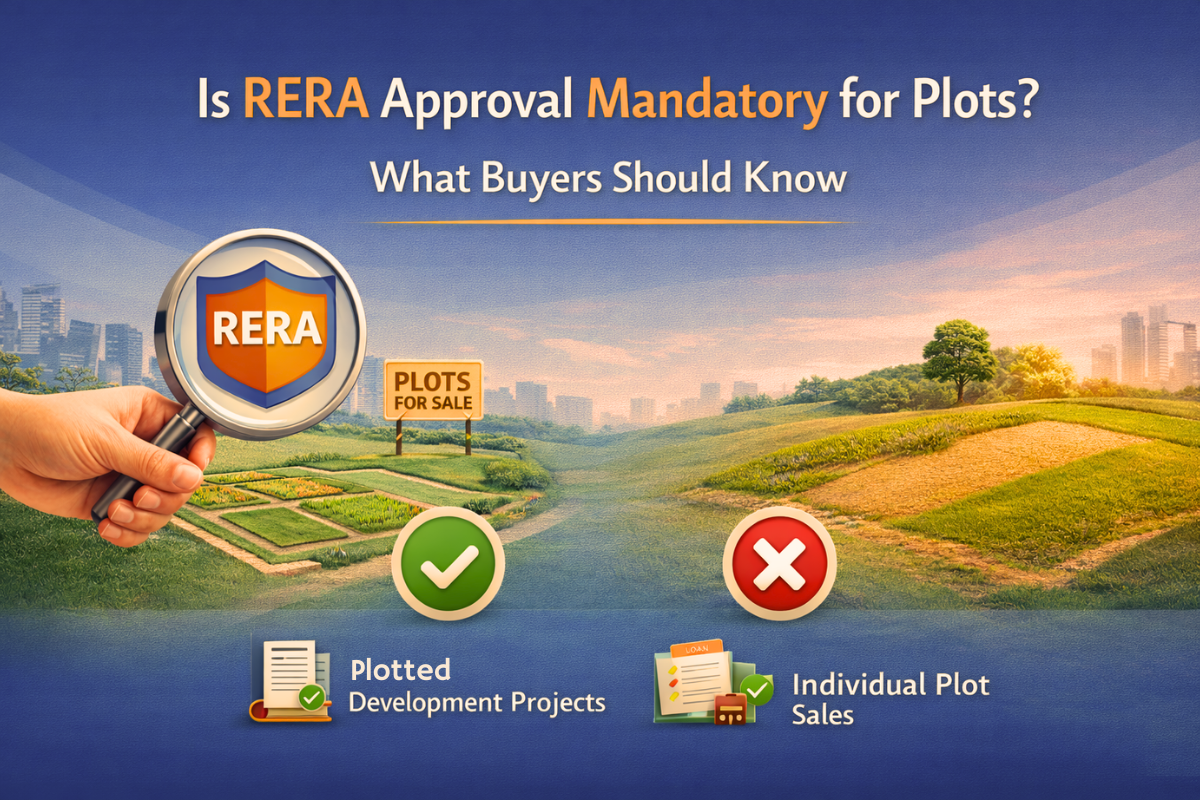
When plots are sold as part of an organized plotted development project, they normally need to be registered with RERA. Regulatory inspection may be needed when developers sell plans that include multiple lots inside an intended building. This is because buyers depend on provided infrastructure and development.
RERA usually applies to projects that involve developing roads or utility connections inside buildings. People who want to buy these developments must finish the shared infrastructure. This makes it even more important for authorities to keep an eye on the projects and make them obvious.
They might need RERA authorization if they offer plots using a structured project model with planned development. This makes it easy for buyers to pick the proper project because they can view all the information about it.
|Related RERA Guidelines for Buyers: What Property Buyers in Delhi Must Know|
When Is RERA Approval NOT Mandatory for Plots?
RERA permission might not be required, especially if the sale is of just one lot of property rather than a planned development project. RERA often does not apply to private sales transactions between individuals where no organized layout or common infrastructure is envisaged. RERA registration may not be necessary for agricultural land that has not been turned into residential space.
Also, rules may not apply to agreements when the seller offers land without facilities or coordinated project marketing. Even if RERA doesn't approve, you still need to do a lot of research. To make sure they know their rights, buyers should check ownership records and paperwork on their own. Buyers might be more careful when they know that some plot sales are not covered by RERA.
Difference Between Plotted Development Projects and Individual Plot Sales?
People commonly confuse planned development projects with individual plot sales because they believe that all plot purchases are the same. People use the term individual plot sales to describe about land deals that don't require a lot of work to develop.
RERA manages structured projects differently because they come with commitments for infrastructure and schedules that influence a lot of buyers. But the requirements for community development may not be applicable to sales of single plots that changes the way the laws are followed.
Buyers should find out if the plots are part of a larger project. Buyers can get a greater understanding of the amount of regulatory coverage exists and how dangerous it is by looking at plans for development and marketing campaigns.
What Risks Do Buyers Face If a Plot Is Not RERA Approved?
If a plot isn't RERA-approved, buyers may not be able to get as much regulatory review as is intended to make planned projects more accessible. Buyers might have to do more independent document checks instead of relying on structured information that are usually related to authorized changes.
If developers don't have RERA certification, it may be harder to keep track of schedules or shared facilities on projects with development assurances.
In some cases, legal issues may need more particular documents to support claims. Buyers may exceed the risks and move proceed carefully with non-RERA plot buys if they know about these problems.
What Buyers Should Verify Before Buying a Plot?
Before buying a parcel of property, buyers should first understand what type of land it is and how it works. Check to see if it's residential, commercial, agricultural, or part of a planned development. This will affect what you can do with it and what rules apply to it. When the property status is apparent, buyers don't have to guess about what kind of construction or development might happen in the future.
Buyers should also check on any claims of improvements like shared amenities or utilities. If these products are sold, it is essential to secure the right approvals from the local government and make sure that the project structure follows all the rules.
Buyers should make sure that the land documents and usage licenses are all correct. Buyers can make informed choices by making sure the paperwork clearly explains who owns the land whether the plots are RERA-approved or not.
|Related How to Check RERA Registration in Delhi: A Step-by-Step Guide for Buyers|
FAQs
Is RERA approval mandatory for all plot projects? +
Does RERA apply to individual plot purchases? +
Are plotted developments covered under RERA? +
Can buyers safely purchase plots without RERA approval? +
What documents should buyers verify when buying a plot? +
Conclusion
Buyers can check to see if RERA applies to the project. This will tell them about regulatory coverage and transaction risk. Buyers can make responsible choices that are consistent with their long-term ownership goals by looking at the project's structure and approval status. A careful review makes it easier to get loans and understand the law in the future. Buyers who seek organized assistance with compliance expertise and property due diligence may receive buyer-focused guidance from a professional advising source such as the Indian real estate company Shray Projects.