

Introduction
One of the biggest long-term legal and financial responsibilities an individual can make is to buy a property. When you own a property, you have to deal with paperwork that affect your long-term planning. A skilled approach helps buyers to stay away from issues that could happen after the deal is completed.
People often make decisions prematurely because they don't feel like they have to do so immediately. This leads to errors that could have been prevented. If you don't pay attention to the state of the property or think regarding how beneficial it will be in the long run, you could run into problems that don't show up right away.
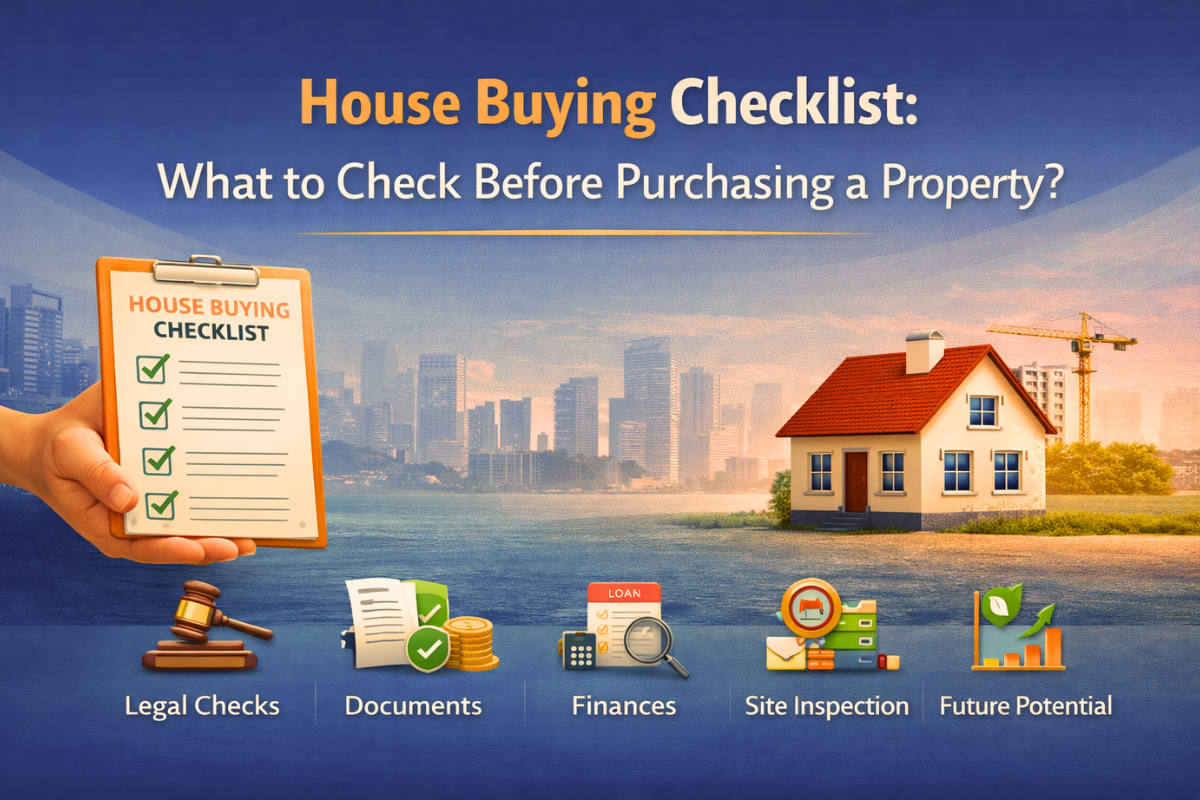
This blog includes a step-by-step list of things to do when buying a home that helps buyers remember essentials. The primary objective is to give buyers time to carefully consider a property's legal and functional difficulties before they make a decision.
|Related Step-by-Step Process of Buying Property in Gurgaon|
Why a House Buying Checklist Is Essential?
A checklist for buying a house tells buyers specifically what they need to do. These variations typically cause difficulties that may have been avoided after the sale when maintenance are more difficult and expensive.
You still own your home when you buy it. When you acquire something, it changes your responsibility for keeping it in good condition and how safe it is in terms of the law. Things could get complex if you don't complete important checks when you transfer ownership or property condition disagreement.
A useful checklist can help buyers calmly and carefully go over every element of the house. It helps people make sensible decisions by making sure that all legal and practical challenges are considered before they make a decision. This detailed plan reduces risk and make a good decision to buy a property.
|Related Checklist for Buying a Flat: What Every Homebuyer Must Verify Before Booking|
Legal Checks Before Buying a House
Buyers should make sure that the ownership is apparent and acknowledged by the law. There should be no question about who has the right to sell the property and the name of the buyer should match in official documents. Checking the title history make sure that there are no other claims on the property and the ownership has changed correctly through the years.
Also, buyers should check that the property has all the necessary permits and approvals from the right people. These could be about the condition of the project or the plans for building. Checking to see if permissions exist helps buyers to figure out whether the property meets legal requirements.
It is just as important to make sure that the actual construction follows the approved plans and laws. If you build a property without the proper permits, you could get into problems. Buyers can check these legal considerations to make sure they are safe and reduce their risk before making a final purchase choice.
Documents to Verify Before Purchasing a Property
Buyers should check important documents that show who owns the property. The selling agreement establishes the details of the contract and helps buyers comprehend the duties each side has agreed to.
The selling act is an important piece of paper that shows that the title has changed ownership. Buyers should check that the history of ownership is consistent. Buyers can also look at approved building blueprints to make sure that the construction follows the rules.
Buyers should also look at the property to make sure that the building fulfills the rules specified by the licenses. Buyers could ask if the property is legal and good for long-term ownership by looking at all of these documents together.
Financial Checks Buyers Should Not Overlook
Financial assurance is a very important part of every checklist for buying a home. Buyers should know about all the costs that come with owning the property, even those that are more than the price of the house itself. These could be taxes, maintenance costs, registration fees, or costs of owning something for a long time that affect the entire budget.
It is also extremely important to look carefully at the payment plan. Buyers should check the schedule that is acceptable to them and what circumstances make payments necessary.
When buyers are thinking about acquiring a loan, they should make sure that the conditions of repayment and financial responsibilities are all things they can afford in the future. Buyers should also know about any future expenditures including maintenance fees so they can find out how much it will really cost to buy.
Property and Site-Level Checks
Buyers should do a practical check of the place. Buyers may figure out if the location satisfies their daily demands by knowing the difference between usable area and carpet area.
It is also very essential to look at the quality of the complete construction. Buyers should look for evidence of consistent finishing and overall quality of construction. This provides an indication of the type of maintenance over time.
Buyers should also make sure that the location is simple to travel and basic services like water and electricity are available. Buyers could ask if a house will still be helpful and comfortable in the future and how easy it is to travel around.
|Related How to Choose the Right Property in Gurgaon (Step-by-Step Guide)|
Builder / Seller Credibility Checks
Buyers should research to find out if the developer is trustworthy. A buyer can see if commitments have been fulfilled throughout the years by looking at past projects.
Another important factor is honesty. Buyers should make sure that the property's details and documentation are clear and consistent.
Buyers must additionally put written promises above verbal assurances. All elements of an agreement including schedules and property requirements should be clearly written. Checking essential assurances are written in formal documents helps to avoid misunderstandings and makes sure that expectations stay the same throughout the buying process.
|Related How to Choose a Real Estate Broker in India: A Complete Buyer’s Guide|
Resale, Rental, and Long-Term Considerations
Buyers should do objective, fact-based research to find out if the builder or seller is trustworthy. A buyer can see if commitments have been kept over time by looking at past projects or transactions at a high level. Even though a full investigation isn't needed, this encourages people to make decisions based on facts instead of guesses.
Buyers should make sure that the property's information and documentation are all clear and consistent. A responsible approach to business is typically shown by being able to give correct records and answer reasonable questions.
Agreements should clearly set out all the rules about schedules and responsibilities. Writing down essential promises in official paperwork helps to keep things organized.
Common Mistakes Buyers Make When Purchasing a House
A lot of people who buy an property fail to do the fundamental legal checks that can lead to errors. If you take ownership without first looking at the papers especially if you need to show ownership when you talk about financing. A full review can help people remain updated before they make a choice.
Buyers may fail to comprehend the payment terms or the documentation information if decisions are made fast. You can make decisions that are complete if you take the time to look at the evidence.
Some customers also don't consider about how the purchase will affect them in the years to come such as maintenance duties or the opportunity to sell it again.
|Related 10 Mistakes People Make When Buying Property in Delhi NCR|
Final House Buying Checklist for Buyers
- Check that ownership is apparent and that the title is the same on all documents.
- Check the sale agreement, the sale document, the approved plans, and the status of the occupation.
- Recognize the entire financial commitment, the due dates, and any upcoming expenses.
- Check if you can get a loan and if you can pay it back in the future.
- Check the flooring area, usable space, and overall condition of the building.
- Check that you can get to utilities, infrastructure, and the site's practical use.
- Check that you can get to utilities, infrastructure, and the site's practical use.
- Look at how open the builder or vendor is and what they promise in writing.
- Think about the long-term ownership benefits and maintenance requirements.
- Look at the resale possibilities, the strength of the documentation, and the rental potential.
- Don't book too quickly; instead of trusting what someone says, check the facts.
FAQs
What is the first thing to check before buying a house? +
Should buyers verify documents before paying a booking amount? +
Are legal checks necessary for resale properties as well? +
How early should financial planning be done when buying a house? +
Can buyers negotiate after issues are found during verification? +
Conclusion
When buyers utilize a systematic house buying checklist to help them make precise decisions about their properties, they are less likely to neglect practical, financial, or legal difficulties. A thorough review of the paperwork, finances, building condition, and long-term usability can help you feel more confident about owning something and make future transfers easier.
Taking the time to confirm details instead of making quick conclusions based on insufficient information encourages careful decision-making. When buyers follow a detailed checklist, they are better able to ask relevant questions and calmly assess hazards. If buyers want organized assistance on property evaluation and due diligence, they could talk to a well-known Indian real estate company like Shray Projects. This will help them stay educated and follow the law throughout the process.