

Introduction
People who are buying or owning an apartment occasionally use the term deemed conveyance to talk about property deals. A lot of people are unaware of it until they have stepped into a building that makes them curious what it signifies and why it is needed.
When the developer doesn't properly transfer property titles and control of the community, it might be challenging to figure out who owns what in buildings with more than one unit. People who live there may think they own the property but they may find out that some legal transfers are still going on.
This blog post explains the differences between a transfer and a conveyance deed when they should be completed and community-based properties.
What Is a Conveyance Deed?
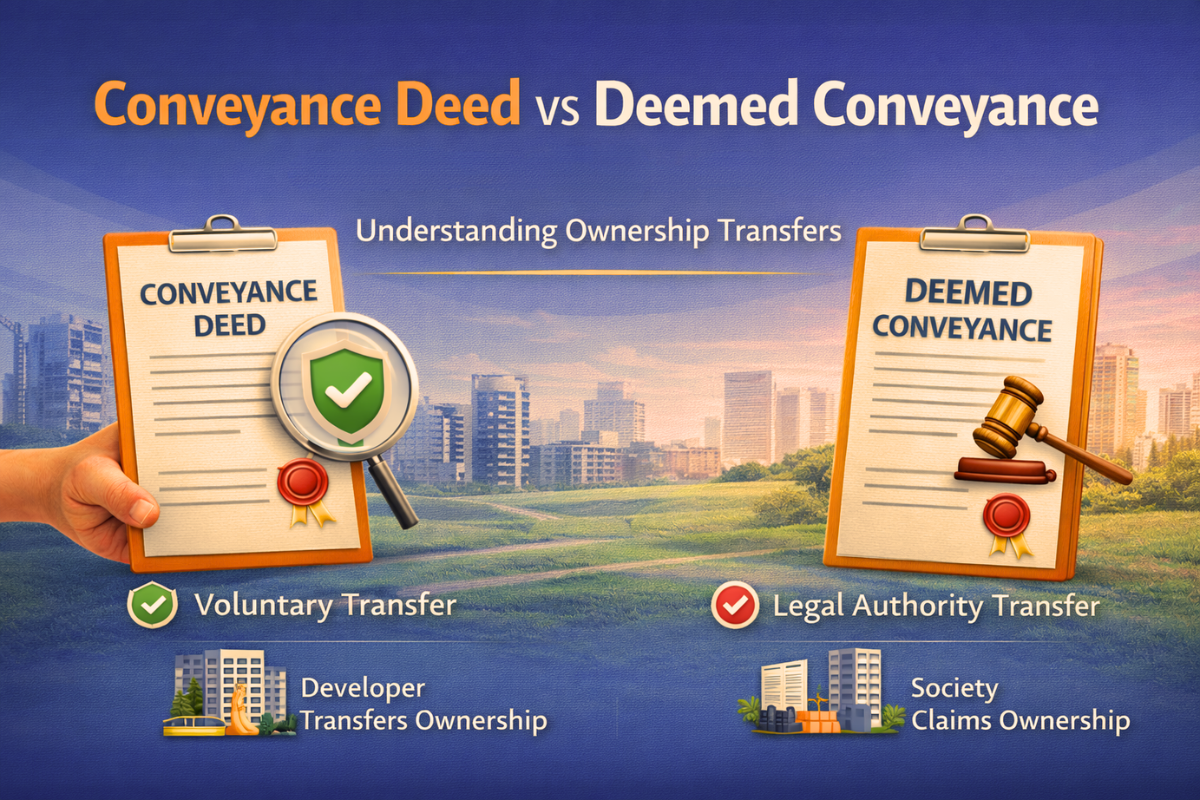
A conveyance deed is a legal document that transfers ownership rights over a property from the developer or the original owner. It helps produce a unique and recognized property title by making sure that the land and building have been officially transferred.
This agreement is very important for apartment complexes since it gives the society or residents' association ownership of the apartments after the project is done. It makes it apparent who has the legal right to the land under the property.
A conveyance deed gives buyers more confidence about who owns the property, makes it less likely that there will be future disputes, and makes it easier to make decisions about inheritance, sales, and long-term property management. It is an important part of making sure that titles are clear.
|Related Conveyance Deed Meaning: Why It Is Important for Property Buyers|
What Is Deemed Conveyance?
If a developer doesn't sign the conventional conveyance document, a housing society or group of apartment owners could use a legal process called deemed conveyance to claim ownership of the land and building. It is there to protect buyers from long delays or non-compliance that could lead to unclear ownership.
This option is generally sought by registered housing societies or associations that represent inhabitants in completed projects, especially older ones where ownership transfer was never finalized.
Deemed transfer makes it easier to sell, renovate, and manage property in the future without needing the original developer's support. It also helps establish ownership control and makes titles clearer for both buyers and renters.
Why Deemed Conveyance Necessary?
If a developer does not sign the typical conveyance deed after finishing a project, they need to assume that it is required.
It might also be hard for private owners to sell their property. People who intend to buy a building with multiple pieces should know about this risk. If you know if conveyance takes place, you might be able to guess the amount influence they will have over the land in the future.
Difference Between Conveyance Deed and Deemed Conveyance
| Aspect | Conveyance Deed | Deemed Conveyance |
| Nature of Ownership Transfer | The developer gives the property to the society or buyer on their own. | Legal authority gives the right to transfer ownership when the developer doesn't do it. |
| Who Initiates the Process | Usually started by the developer as part of their duties to finish the project. | Usually started by the housing society or apartment owners who are having trouble or are not cooperating. |
| Legal Basis | Standard property transfer is done through mutual consent and registration. | If a valid transfer isn't done freely, there is a special legal remedy available. |
| Applicability Scenarios | New or properly finished projects when ownership changes hands without a hitch. | Old projects or circumstances where developers put off or don't do the conveyance deed. |
| Impact on Ownership Clarity | When done correctly and on schedule, it gives clear legal title. | Helps fix spaces in ownership and make rights official when the transfer wasn't finished. |
| Long-Term Implications for Buyers | Helps with easy sales, financing, redevelopment, and running a community. | Gives owners back legal ownership, however it could mean that there were delays in the past or problems with project management that haven't been rectified. |
Is Deemed Conveyance as Strong as a Conveyance Deed?
A transfer offer serves as legal proof of ownership when a standard conveyance tool has not been easily signed. A legal process gives it to apartment owners so they can officially set up their rights to transfer property. It could be hard for a normal transfer to happen if developers are late.
Buyers should also keep in mind that planned conveyance often happens because of mistakes committed by the government not because the project was finished on schedule. Even though it can help businesses maintain a record of building rights and prove ownership, buyers may still need to carefully review the documents and the supporting records to make sure they are all true. Buyers should look over all of the property's papers and history of the project.
|Related Difference Between Conveyance Deed and Sale Deed Explained|
What Buyers Should Know Before Purchasing a Property Without Conveyance Deed?
Because it is possible for ownership to be partially transferred at the land or society level, buying a property without a conveyance deed requires careful thought. Buyers should know if the building land has been legally transferred to the association or is still in the developer's name, since this could affect the long-term clarity of the title. A lack of ownership paperwork may also make it harder to sell the property or get financing because lenders often look at the ownership structure before giving out loans.
Buyers should also look at how rights are handled in society and who controls the land. Knowing these things can help you avoid fights or problems with the law in the future. People should ask if the current definition of ownership duties includes conveyance and if it has been delayed. Buyers can prevent buying poor real estate by checking at paperwork and registration information. This helps people understand the risks and ensures they don't just go with their instincts.
|Related List of Documents to Check Before Buying a Flat in India|
Common Misconceptions About Deemed Conveyance
A lot of buyers think that intended conveyances are weaker for a short period that is not the case with a regular conveyance agreement. People often come up with this idea because they don't know what the law says about it. It is especially useful when developers delay giving up ownership.
People often think that approved conveyance signifies that there are legal complications with a property. It doesn't always mean there are problems with ownership; it usually implies there are delays in the administration. Buyers might think that reselling is difficult but having the right paperwork and registering might make future sales easier. Buyers can look at property make a decision based on clear ownership if they know the difference between perception and legal standing.
FAQs
What is deemed conveyance in real estate? +
How is deemed conveyance different from conveyance deed? +
Is deemed conveyance legally valid for property ownership? +
Can buyers sell property with deemed conveyance? +
Why do some properties not have a conveyance deed? +
Conclusion
When buyers understand the difference between a conveyance deed, they are able to evaluate ownership rights and long-term property assurance before making a decision. When you read the papers carefully, understand how ownership is changing and you can be more sure about your real estate decisions. Buyers who are honest regarding the things they buy defend their money and make the law more apparent. An expert Indian real estate agent can help buyers look at paperwork.