

Introduction
The largest error that real estate purchasers make is to compare apartments only in terms of square footage reported without comprehending what that number actually means. In the Indian real estate sector, the terms carpet area, built-up area and super built-up area are commonly used by builders, but many buyers are not aware of the differences. This mistake can directly affect the real living area, the estimation of price per square foot, future resale value, potential rental income and the overall investment return.
A home that seems bigger on paper could have surprisingly little usable space. Before you buy anything, you need to understand these measurements. This guide walks the buyer through a more realistic and investment approach to buying houses, explains how builders price units and provides a full analysis of each type of neighborhood.
What Is Carpet Area?
Actual Usable Internal Living Space
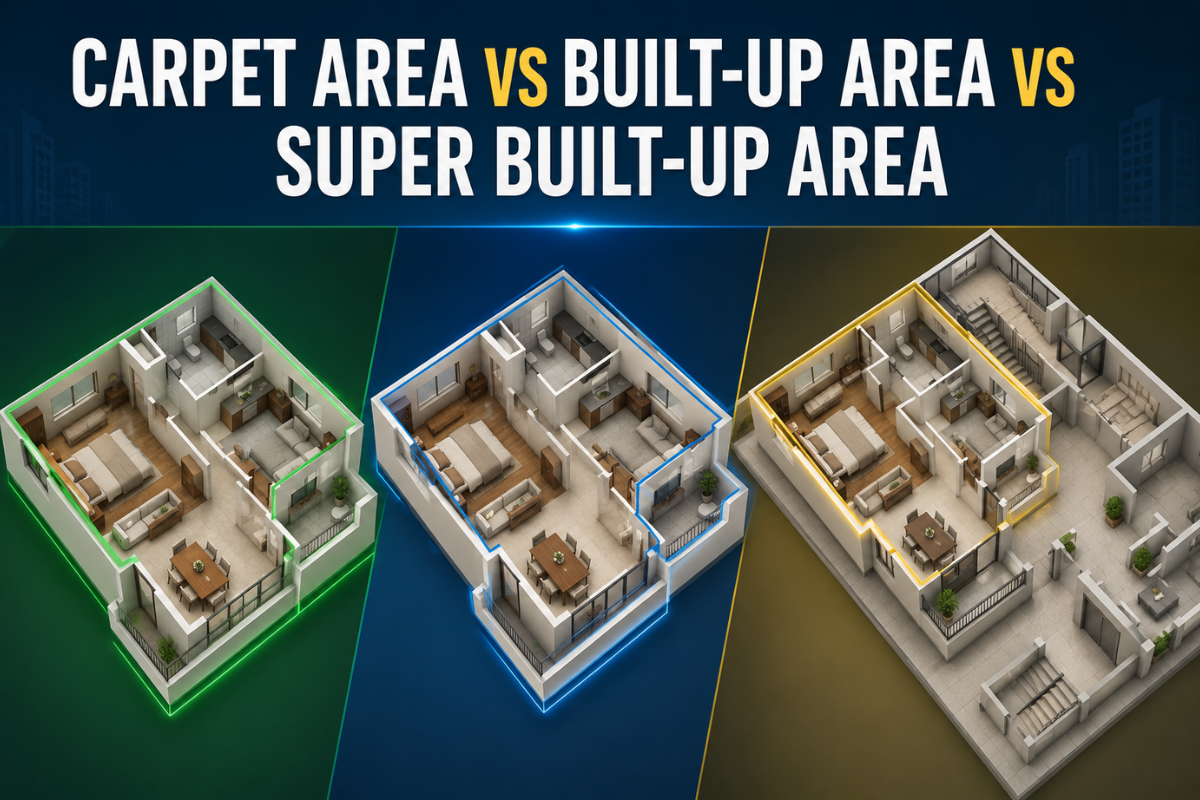
Carpet area is the actual usable surface within an apartment where the tenants may comfortably place their furniture, stroll freely and make use of the living space. It eliminates balconies, patios, ducts and shared areas and external walls.
RERA Definition
The carpet area is well specified under the Real Estate Regulatory Authority framework to bring transparency in property transactions. Builders have to now disclose the carpet area correctly while selling residential apartments.
Why Carpet Area Matters Most?
Carpet area is the most lucid way for consumers to know how much actual living space they are getting. This is the most practical assessment of how usable a flat is.
Livability Perspective
Two apartments with identical super built-up sizes can have very distinct feels based on the real carpet area efficiency and floor planning.
Real Cost Analysis
Buyers know the actual cost per square foot instead of just the big stated sizes when calculating property pricing on carpet area.
What Is Built-Up Area?
Carpet Area + Walls + Balconies
Built-up area is the carpet surface in addition to the thickness of internal and external walls, balconies, utility spaces and some associated areas inside the apartment layout. It is bigger than the real living space at your disposal.
How Builders Present This Figure?
Carpet area is smaller than the built-up area, hence many developers utilize the built-up area to market the flats as it gives a greater number. Buyers often interpret the whole total as usable space, which can lead to confusion when comparing properties.
Partial Practical Value
Built-up area gives a little better insight into the size of an apartment but not all the space included is always usable in day-to-day life. Active usage as a living space is not available for the wall thickness and certain structural parts.
Cost Implications
The pricing is based on built-up space and not carpet area. This increases the effective cost per usable square foot. So, the buyers should carefully compare the actual carpet area before judging the value of the house.
What Is Super Built-Up Area?
Common Areas Loading
Super Built-up Area comprises Built-up Area and a proportionate part of the common areas in the residential project. This is generally known as the loading factor in Indian real estate.
Clubhouse and Loading Factor
While calculating super built-up area, builders could include a small fraction of amenities like clubhouses, gyms, reception halls and common facilities and increase the saleable size.
Lift Lobbies and Corridors
Super built-up estimations also include proportionate common hallways, staircases, lift rooms, entrance lobbies and other shared infrastructure in apartment measures.
Builder Marketing Strategy
Talking about flats, developers often sell apartments on the basis of super built-up area as bigger numbers seem good to purchasers while making comparisons.
Why Super Built-Up Often Inflates Perceived Size?
An apartment listed as 2,000 sq ft can have a lot less actual area to use because of high loading percentages. This can set up unreasonable expectations about the size and value of an apartment.
Carpet Area vs Built-Up Area vs Super Built-Up Area — Key Differences
Usable Space
Carpet area is the actual usable internal area of the flat while built-up area includes walls and balconies. The super built-up area also includes a proportion of communal amenities and shared areas.
Saleable Area
Builders generally offer apartments based on super built-up area as this provides a higher saleable figure than the real usable space.
Loading Percentage
Loading is the difference between a super built-up area and carpet area. The more you load the more the buyers pay for the non-usable shared area.
Price Transparency
Many customers just look at the reported square feet and don’t check for carpet area efficiency. This can affect comparisons of real property value.
ROI Implications
Better carpet to super built-up ratios tend to make for more practical value, rental usage, and long-term buyer appeal.
Buyer Decision Logic
Smart buyers always check the carpet area first as it gives an idea of actual livability and helps calculate the real cost per usable square foot before buying.
How These Measurements Impact Property Price Per Sq Ft?
Artificially Lower Advertised Prices
Super built-up area is typically used by builders to compute the price per square foot. The bigger denominator used makes the price given look lower and therefore more desirable to purchasers.
|Related What Is Price Per Sq Ft and Why It Can Be Misleading?|
True Effective Cost Calculation
Ideally the cost of the real property should be worked out on the carpet area as it is the actual usable living space inside the flat.
Premium Project Pricing Manipulation
Luxury and premium developments can use high loading percentages to justify bigger saleable areas while keeping per-square-foot pricing seeming competitive.
Hidden Costs
Buyers may be paying for corridors, clubhouses, lift lobbies and communal infrastructure that do not directly contribute to private living space.
Comparison Mistakes
Just looking at reported square footage can create false assumptions when comparing two units. A smaller super built-up apartment that is more carpet efficient might, in fact, be a better value and have better livability than a larger project that is heavily burdened.
|Related Circle Rate vs Market Rate: What Really Determines Property Value?|
How Investors Should Evaluate ROI Using Carpet Area Instead of Super Built-Up Area?
Rental Yield Accuracy
The rent you can charge is based on actual usable living space and not highly loaded hyper-built-up figures. Properties with efficient carpet space tend to have higher tenant satisfaction and greater rental performance.
Resale Value
Future customers are placing more importance on practical livability and space efficiency. In competitive areas, apartments with higher carpet area ratios tend to have better resale appeal.
End-User Practicality
The utilized interior area offers true living comfort. Investors should think about whether the apartment layout is really suitable for long-term residential use, rather than simply looking at the reported measurements.
Developer Comparison
Investors can compare projects based on carpet area and know which developers are more space efficient and offer fairer pricing structures.
|Related Rental Yield Explained: How to Calculate Returns on Property|
Common Builder Marketing Tactics Buyers Should Watch
Large Super Built-Up Promotions
Most developers like to market apartments with massive super built-up figures. The bigger the figures, the greater the visual impact and the faster it catches a buyer’s attention.
Hidden Loading Percentages
Some proposals do not explicitly mention the ratio of load between carpet area and super built-up area. Buyers may discover later that the actual usable space is substantially less than anticipated.
Luxury Loading Premiums
Premium residential complexes tend to have greater loading factors to clubhouses, lounges, landscaped zones and extensive shared infrastructure. This increases the entire purchase cost.
Amenity Inflation
On occasion, builders will aggressively promote community amenities to justify higher prices, even if those amenities have limited practical impact on the day-to-day living experience.
Misleading Size Comparisons
You may have two flats of the same claimed size but with radically different carpet areas. Buyers who evaluate properties on brochure size alone may miss the true livability, value and long-term investment potential.
RERA’s Role in Improving Buyer Transparency
Standardisation
There was a higher standardisation of property transactions with the Real Estate Regulatory Authority, with clearer laws for project disclosures and estimations of area.
Carpet Area Disclosure
Under RERA regulations, developers must disclose carpet area accurately instead of relying only on super built-up figures for marketing. This helps buyers understand the actual usable space they are purchasing.
Buyer Protection
RERA has brought in transparency by curbing misleading ads, hidden loading and exaggerated property size claims that had led to a lot of uncertainty in the market.
Legal Safeguards
Buyers now have more legal protections against misleading depictions of the location, delayed delivery and unfair project disclosures. This brings accountability across the real estate industry.
NCR Implications
In fast-developing areas like Gurugram, Noida and adjoining NCR corridors, RERA has done a lot in instilling confidence in buyers by promoting more transparent pricing and better practices in the valuation of properties.
Delhi NCR Perspective — Why Area Clarity Matters More in Gurgaon, Noida & Dwarka Expressway
High-Rise Project Comparisons
In places like Gurugram, Noida and the Dwarka Expressway corridor, buyers are often comparing various high-rise projects that have quite varied loading structures and space efficiency.
Luxury Corridor Pricing
In NCR, premium residential projects have big super built-up areas on offer; examination of carpet area is a must to know the real worth of living and the real cost per square foot.
Developer Competition
Strong competition among developers has led to aggressive marketing of apartment sizing, amenities and luxury positioning. If you know how to calculate the area, you can compare more intelligently when you buy.
ROI-Based Sector Analysis
Whether NCR investors are looking at rental revenue or future appreciation in NCR sectors, efficiency of the carpet area should be looked at as end users are increasingly looking at practical usable space and not inflated stated sizes. This immediately affects rental demand, resale value, and long-term investment success.
|Related What Affects Property Prices? 10 Factors Every Buyer Should Know|
Conclusion
Making wiser real estate judgments in today's cutthroat market requires an understanding of the distinctions between carpet area, built-up area, and super built-up area. Buyers who just consider advertised square footage frequently fail to consider long-term investment value, effective price, and real usable space. Carpet area evaluation improves transparency, strengthens ROI analysis, and produces more accurate project comparisons. Buyers evaluate the worth of real estate, compare projects wisely, steer clear of hidden pricing traps, and make more assured real estate investment choices based on future growth potential and practical utility.