

Introduction
India’s property rate is often confusing because there are two pricing systems operating at the same time – the circle rate and the market rate. Real transaction prices are usually driven by market demand, geographic growth, infrastructure and buyer mood, but many buyers feel the government-assessed valuation correctly reflects the underlying worth of a property.
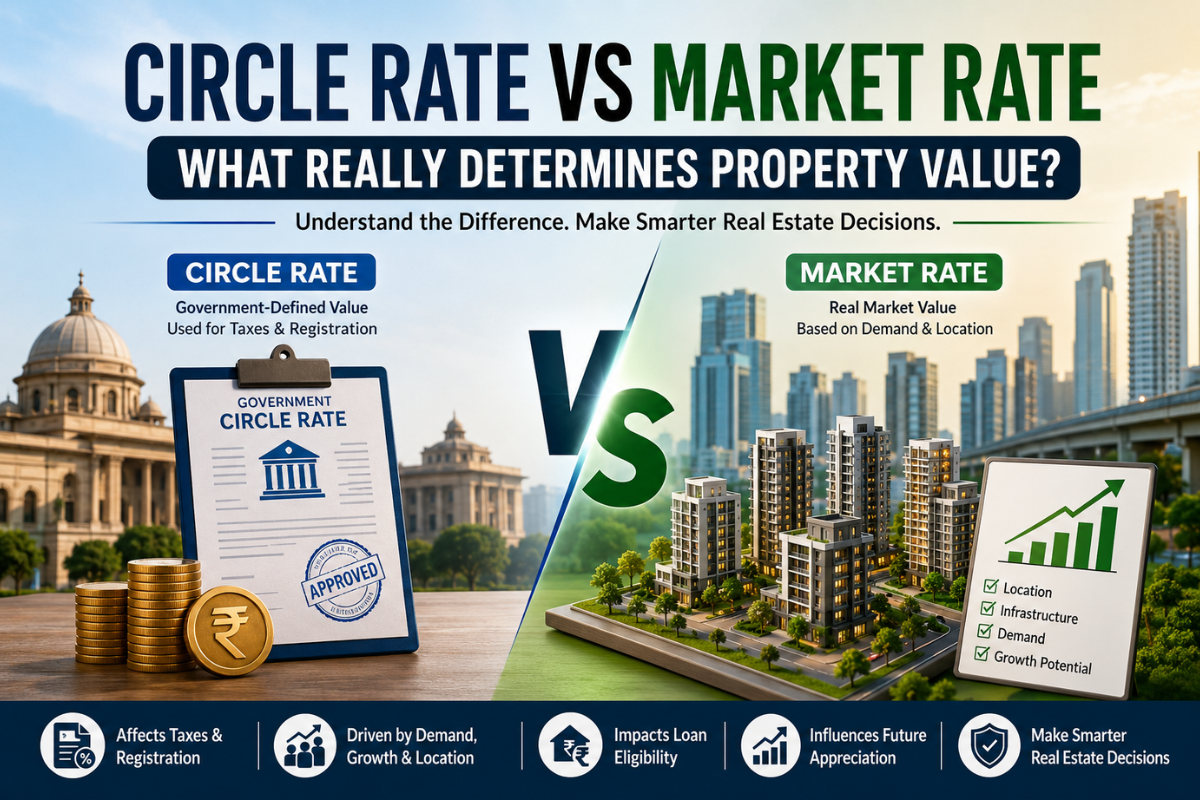
The circle rate is the government-fixed compare to determine stamp duty, taxes and property registration. But the market rate is the real price that buyers and sellers arrive at in an open market. This difference must be understood by buyers, sellers and investors. This training clarifies popular myths about property valuation, exposes the true workings of pricing in India and utilizes valuable valuation data to help investors make better real estate decisions.
What Is Circle Rate in Real Estate?
Government-Defined Valuation Benchmark
Circle rate is the minimum property value determined by the government for a certain area or locality. The regulatory benchmark below which a property normally cannot be registered. State authorities set these tariffs depending on location, infrastructure, land category and nearby development activities.
Stamp Duty and Registration Implications
Stamp duty and registration fees when you buy a home are directly affected by circle rates. If the transaction value is below the government benchmark, the authorities normally calculate the taxes based on the higher circle rate value. This can have a huge impact on the total purchase cost for buyers.
State-Specific Variations
Circle charges are different from one state to another and even across local zones in the same city. Benchmarking for government valuation purposes in the premium urban sectors is generally well above that in developing areas or fringe locales.
How Circle Rates Affect Legal Transactions
Circle rates are helpful in discouraging undervaluation in property dealings and give a benchmark for taxation, registration and legal property paperwork in India.
What Is Market Rate and How Is It Determined?
Real Buyer Demand
Market rate means the price a buyer is willing to pay for a property in prevailing market conditions. Market prices are not like government valuations, which are fixed reference points. They move with demand and investment activity.
Location Desirability
Market values tend to be greater for properties in prime areas with good connections, schools, business hubs and lifestyle infrastructure.
Builder Reputation
Developers with a proven track record for excellent construction and delivery are frequently better priced than less well-known builders.
Infrastructure Growth
New metro lines, expressways, airports and commercial developments can instantly drive up home prices in the vicinity.
Supply-Demand Dynamics
Generally, when there are fewer homes for sale and buyer demand is increasing, market rates go up. On the other hand, an excess of homes on the market might put downward pressure on pricing.
Negotiation Power
Final market value also depends on buyer/seller negotiation, urgency of sale and market attitude at the moment.
|Related Carpet Area vs Built-Up Area vs Super Built-Up Area Explained Clearly|
Circle Rate vs Market Rate — Key Differences Buyers Must Understand
Taxation vs Practical Value
The circle rate is generally used for taxation and legal registration purposes and the market rate is the real practical value that the buyers are prepared to pay in real-world transactions.
Registration Value vs Resale Value
Stamp duty and registration expenses are worked out based on government value but resale potential is linked more to market demand, growth in location and buyer desire.
Financing Implications
Banks and financial organizations usually consider both the circle rate and market value before sanctioning home loans. Huge differences between the two can impact financing calculations and loan eligibility.
White Money vs Black Money History
In the past, undervaluing property deals made it possible to conduct partial cash transactions outside the official books. Higher circle rates were brought in to check such practices and to promote transparency in transactions.
Urban vs Emerging Corridor Differences
Premium urban locations tend to have market rates significantly higher than government norms. In corridors still under development, the difference may remain tighter until demand and infrastructure boost the valuation of properties.
|Related How Interest Rates Impact Real Estate Prices?|
Why Does the Gap Between Circle Rate and Market Rate Exist?
Government Revision Lag
Government officials alter circle rates from time to time but real estate markets can be much quicker. This delay sometimes causes discrepancies between the official assessment and the real prices of transactions.
Rapid Urbanisation
Cities are increasing fast, population, business, and people are growing, and so is housing demand. Market values grow faster than official benchmarks.
Infrastructure Announcements
New metro routes, expressways, airports and commercial areas can turn some places into hot spots for buyers even before projects are completed.
Premium Project Launches
Luxury developments or branded residential projects typically fetch higher costs since buyers are paying for lifestyle, facilities and the reputation of the developer, not just the land value.
Investor Speculation
Investors often buy up properties in the hope of future appreciation, which can push the market price over the government valuation.
Local Demand Shifts
Circle rates may not immediately reflect micro-market movements, demand for rentals and desirability of localities, which can impact property prices quickly.
How Smart Investors Use Circle Rate and Market Rate Gaps?
Undervalued Micro-Markets
The savvy investors are watching the sectors where the infrastructure expansion and demand from the buyers are exceeding the updates in the valuation of the government. These micro-markets tend to have good appreciation potential over the long run.
Registration Savings
The lower circular rates compared to the actual market price can be advantageous for the investors as they will have to pay a reduced stamp duty and registration charges at the time of purchase.
Future Appreciation Opportunities
Large disparities between government benchmarks and growing market demand can be an indicator of a future increase in valuation. Investors typically enter these markets early, before official rates catch up.
Distress Resale Analysis
In slow markets some resale properties are sold at prices closer to the circle rate as sellers have urgent necessities. These conditions present buying opportunities at a discount to investors.
Builder Launch Pricing Advantages
Well-known developers might roll out early-stage projects at attractive prices before surrounding infrastructure is fully developed. “Investors who get in during the launch phases typically get better appreciation as demand builds over time.
|Related Rental Yield Explained: How to Calculate Returns on Property|
Risks of Ignoring Circle Rate vs Market Rate Differences
Overpaying
Buyers who simply look at advertising prices and do not compare government valuation and local market trends may end up paying more than the property’s genuine worth.
Loan Eligibility Issues
Banks take into account the market value and legal appraisal before issuing loans. The gap between the circular rate and the transaction value can be considerable and affect both the eligibility for finance.
Tax Scrutiny
When a property sale is registered at a rate that is too far below the prevailing government standard, tax authorities might challenge the valuation and apply further scrutiny or fines.
Resale Complications
Properties purchased at artificially inflated market prices and in areas of poor demand may not be able to be resold as quickly and may not attract as many buyers.
Legal Undervaluation Risks
Legal and financial concerns can occur from the representation of low transaction values to reduce registration expenses. It might affect the processing of future capital gains and the transparency of documentation in resale deals.
How Property Buyers Should Evaluate Real Property Value?
Compare Recent Transactions
Buyers must find out past selling prices of similar homes in the same locality to understand the real market behaviour rather than depending just on the stated rates.
Study Locality Trends
The value of a property is mostly driven by neighborhood development, rental demand, connectivity and commercial activity in the future. The local market trends offer a more transparent view of valuation.
Assess Infrastructure Pipeline
Upcoming metro projects, highways, airports, and corporate hubs can greatly influence future appreciation potential and long-term property demand.
Check Developer Credibility
The developer’s record of delivery, quality of construction, legal clearance and market standing are directly related to the present price and future resale value.
Evaluate Long-Term Usability
Buyers should consider the property that will be practical for living in, renting out or reselling over the next few years.
Legal Documentation Review
Clear ownership titles, RERA registration and legal verification are important to maintain property value in the future.
|Related How to Evaluate a Real Estate Investment Like a Pro?|
Delhi NCR Perspective — Why This Matters More in Gurgaon, Dwarka Expressway & Emerging Corridors
Sector-Based Price Disparities
In areas such as Gurugram and Dwarka Expressway corridor, property values can vary significantly from one sector to another depending on connectivity, quality of infrastructure and concentration of developers.
Infrastructure-Led Valuation Spikes
Metro growth, highway development, commercial hubs and airport connectivity often lead to a dramatic surge in market value far before the government circle rates are updated.
New Launch Premium Distortions
It is also important to note that launches by premium builders in rising corridors are often priced above the market as consumers buy on the promise of future growth, lifestyle-based positioning and brand assurance, rather than existing area standards.
End-Use vs Speculative Demand
Some NCR micro-markets are fueled by genuine residential demand and some by speculative investment activity. It is important to understand the distinction, as speculative pricing can drive market prices far beyond practical end-user value for a period of time.
|Related What Is Price Per Sq Ft and Why It Can Be Misleading?|
Conclusion
Understanding the difference between the circle rate and the market rate is important to make smarter real estate decisions in today’s fast-changing property market. Knowing the value trends helps buyers avoid pricing traps, find actual opportunities to invest and make better location comparisons across developing regions like Delhi NCR.
A more systematic way of buying real estate for personal use or long-term investment involves the assessment of both government benchmarks and real market demand. Shray Projects is an advising-oriented real estate agency in India that enables customers to assess the actual value of a property, evaluate its growth potential and make confident real estate investment choices aided by location research and market data.