
Introduction
When you acquire a residential property you have a huge choice between low-rise and high-rise units. The layout of a building can affect day-to-day comfort, privacy, access to shared services and the long-term cost of ownership. Both these property options are available in separate residential neighbourhoods of Gurgaon offering buyers diverse living layouts and residential experiences.
But consumers need to look beyond flat size, pricing and beautiful project photographs before making a decision. It is also important to grasp the practical distinctions between the various types of habitation. This guide describes the characteristics, benefits, downsides, maintenance needs, safety provisions and amenities of these homes, to assist consumers choose a home that meets their lifestyle and long-term needs.
What Is the Difference Between Low-Rise and High-Rise Apartments?
Understanding Low-Rise and High-Rise Residential Buildings
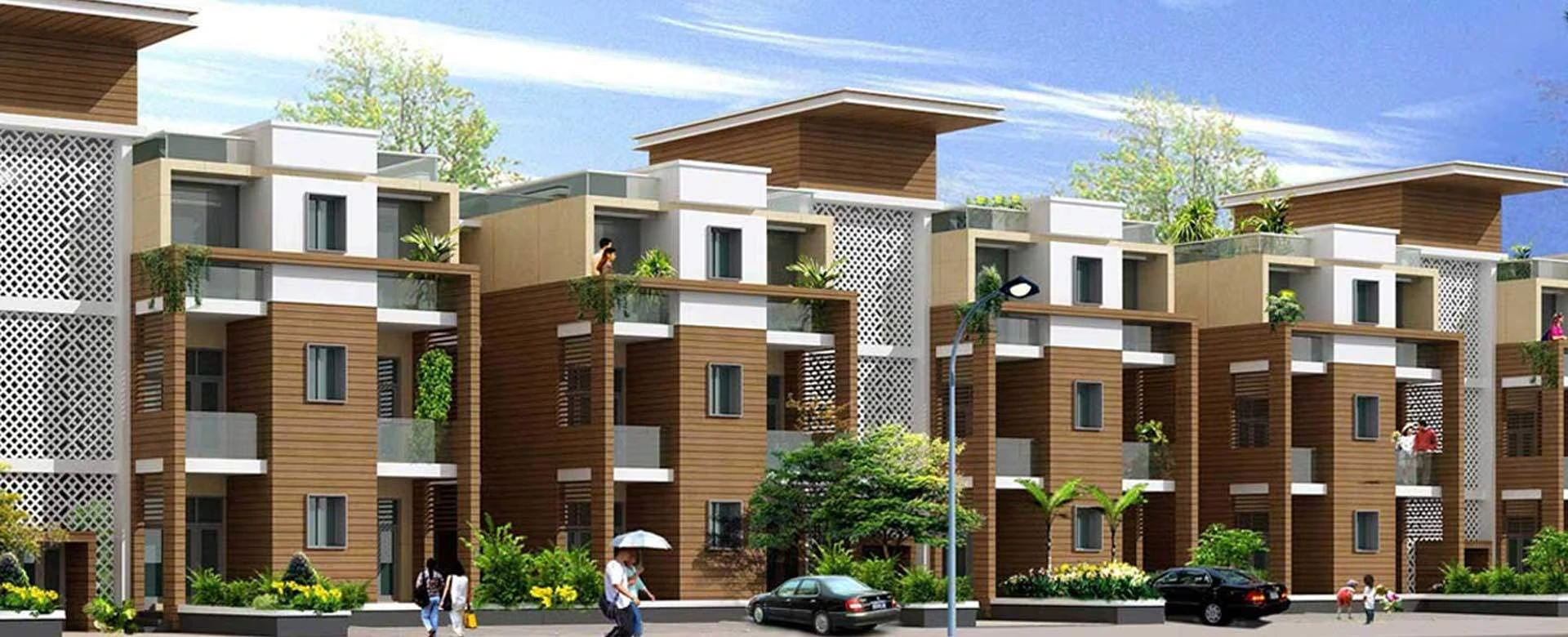
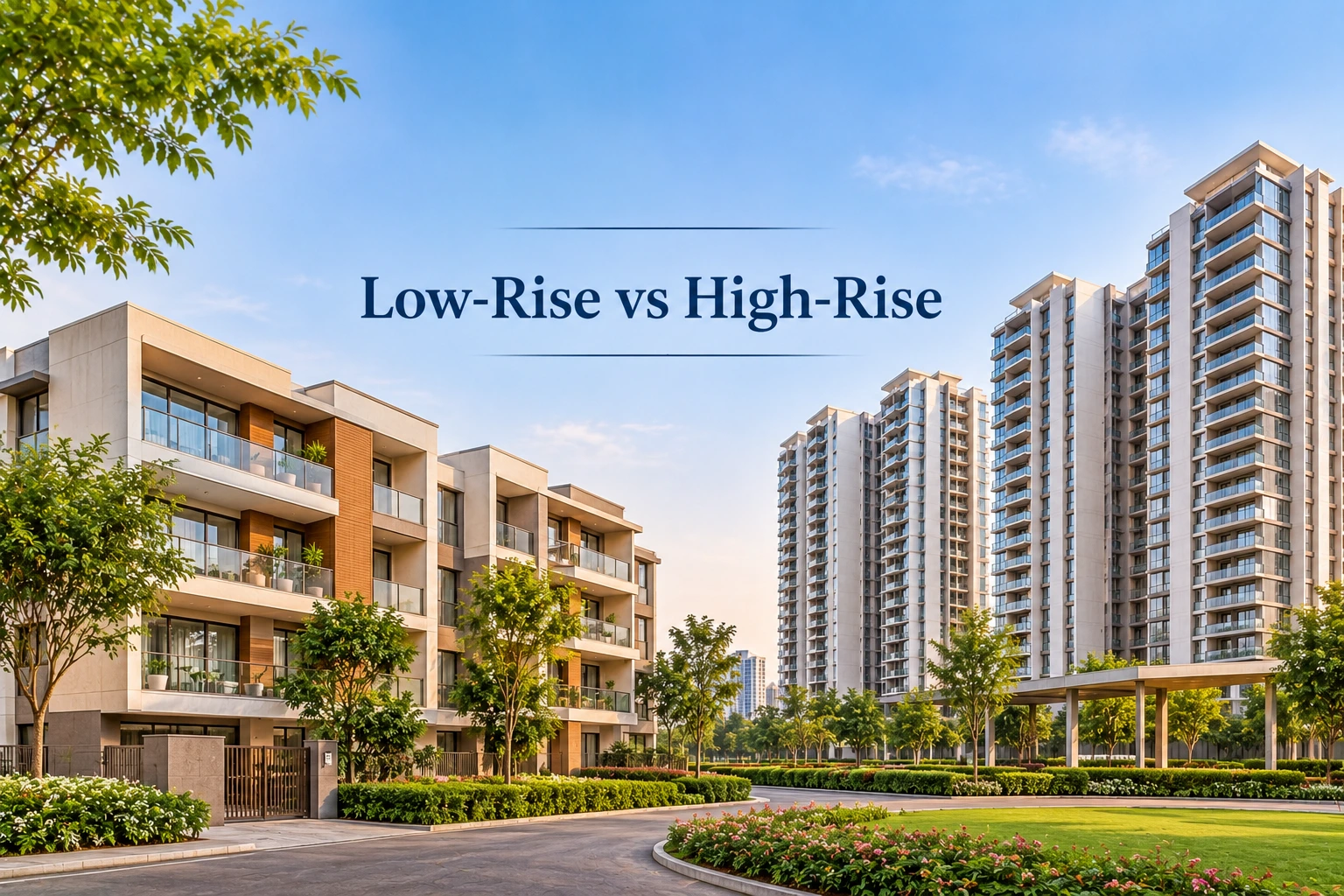
Low-rise structures have significantly fewer floors and usually include fewer households. They may provide independent-floor configurations, smaller residential communities and shorter access routes. Also, some developments have direct access to gardens or the outdoors. However, the arrangements for shared utilities and upkeep can be very different.
Gurgaon’s low-rise housing is made up of individual builder floors, small apartment buildings and planned low-rise residential complexes. The dwellings could appeal to consumers who prefer a smaller residential environment or a more independent way of life.
High-rise apartments are tall residential towers, with homes built on numerous floors. They often have lifts, shared lobbies, coordinated building services and maintenance schemes. There are also many developments with gated security, basement/structural parking and communal amenities such as clubhouses, swimming pools and landscaped spaces. Views and natural light can be greater on the upper floors, depending on what’s around you. There is no standard rule for the number of floors of every low-rise and high-rise building.
Low-Rise vs High-Rise Apartments: Key Differences
| Comparison Factor | Low-Rise Apartments | High-Rise Apartments |
| Building Height | Relatively fewer floors | Multiple residential floors |
| Number of Residents | Often fewer households per building | Generally more households per tower |
| Privacy | May have fewer shared entrances and neighbours | Depends on apartments per floor and tower layout |
| Lifts | May or may not be available | Essential for vertical access |
| Amenities | Varies from basic to premium | Often includes extensive shared facilities |
| Maintenance | May be individually or jointly managed | Usually managed through a society or facility-management system |
| Security | Depends on building or community arrangements | Often centralised within gated societies |
| Parking | Depends on plot size and approved arrangements | Often includes basement or structured parking |
| Natural Light | Depends on layout and surrounding buildings | Higher floors may offer broader views and daylight |
| Emergency Access | Fewer floors may make access simpler | Requires effective fire safety and evacuation systems |
| Community Living | Often a smaller residential environment | Generally a larger organised community |
| Ownership Costs | Depend on maintenance and building requirements | Depend on amenities, services and maintenance charges |
Advantages and Disadvantages of Low-Rise Apartments
Advantages
- Some complexes have less occupancy, so there is not as much of a community feel.
- Fewer common entrances and neighbours might lead to more private living.
- Residents may have improved access to outdoor spaces and shared places.
- Homes on the lower floors are accessible without over-reliance on lifts.
- Builder floors might offer independent entrances or ownership at floor level.
- It might be easier to get to the ground and lower floors for persons who have difficulty with stairs or lifts.
Disadvantages
- Some complexes may not feature clubhouses, swimming pools, or other comprehensive recreational amenities.
- Security systems may be based on individual building or communal arrangements.
- There may be fewer owners to manage and contribute to shared area expenses.
- The number of parking places available may vary from site size and permitted layout.
- Some buildings might not have lifts; others may not have many facilities.
- Lifts and common spaces may have less elaborate backup measures.
- Disputes about repairs, contributions for maintenance and common parts of self-managed buildings.
How to Choose Between Low-Rise and High-Rise Apartments for Your Lifestyle
Advantages and Disadvantages of High-Rise Apartments
Residents may have access to clubhouses, swimming pools, gyms, children’s play areas and venues for community activities. Higher levels can also offer appealing vistas, depending on the position of the building and the adjoining structures. Families and working professionals benefit from shared power backup, different flat designs and common recreational features that make everyday living more convenient.
However, there are other disadvantages to living in high-rise buildings. Residents rely on lifts to get about on a regular basis and waiting times can be extended during peak times or repairs. Larger resident populations can also be challenging in terms of parking, visitor management and the usage of common facilities. Some occupants may hear noise from common hallways and adjacent flats. The building's height and configuration may need greater preparation for emergency evacuation.
These are not limits that make all high-rise buildings less safe, more expensive or less private. The experience depends on the approved building design, the quality of construction, the position of the flat, the safety measures and the management requirements. Buyers should look at the specific development, not only decide whether to buy or not based on its height."
Compare Privacy, Safety, Maintenance, Accessibility and Lifestyle Costs
The number of floors is not the only thing that affects privacy. Buyers should investigate how many flats there are on each floor, if entrances are shared, how near adjoining buildings are and whether balconies look into other residences or open spaces. We also need to think about noise from corridors, lifts and roadways near the houses. A low-rise structure may have fewer neighbours but a well-planned high-rise apartment can provide the same level of solitude.
Buyers should check approved fire safety systems, fire exits, protected staircases, detection and alarm systems, firefighting infrastructure and emergency evacuation methods. They must also ensure that the building conforms with the relevant safety regulations and that the critical systems are maintained and functioning correctly. In high-rise buildings, the reliability of emergency procedures and secure access to stairways are of particular importance.
The accessibility should be adapted to the daily demands of the home. Older people, families with young children and people with mobility restrictions might want to live on the ground level or lower floors to avoid reliance on lifts. Families with numerous cars should check out parking allotment, access ways and visitor parking before buying.
Maintenance expenditures should be compared to the full monthly and annual expense. These include society maintenance, lift maintenance, security, power backup, clubhouse fees, repairs, sinking-fund contributions, water charges and shared electricity. A low-rise structure may have fewer shared services, but can put upkeep costs on a smaller group of owners.
High-rise communities may have more common recreational amenities and greater opportunities for social interaction. Low-rise developments could offer a more residential environment and improved access to some outdoor locations. Buyers have to decide if they want shared amenities, independent living, a quieter community, or some combination of these features.
Which Is Better for Families, Senior Citizens, Professionals and Gurgaon Homebuyers?
High-rise communities may suit families with children as many provide planned play areas, swimming pools, sports facilities and shared recreational areas. Such facilities might provide convenient activities in the residential complex. Low-rise buildings, however, may appeal to families that want fewer neighbours, smaller communities and easier access to surrounding outdoor areas. In either configuration, parents should look at safety procedures, play places and the distance between their home and common facilities.
Instead of merely concentrating on building height, the senior folks should concentrate on accessibility, medical support arrangements, lift dependability and emergency access. A ground-floor flat or house in a low-rise building could mean less reliance on lifts for everyday use. But a good quality high-rise with reliable lifts, accessible entrances, emergency systems and expert management can also suit their needs.
High-rise societies are preferred by working professionals as they provide controlled services, security, and common amenities such as a gym or a leisure area. These things might add to a comfortable home life. Conversely, independent low-rise floors might be better suited for professionals who seek solitude and fewer shared spaces with a more independent living setup. They should also consider commuting distance and access to workplaces in their choice.
Luxury home buyers should not assume that a format is more premium, but rather examine the real attributes of each property. Boutique low-rise complexes and larger independent floors could provide you with more space and independence. High-rise luxury homes can offer superior vistas, rich facilities, security provisions and concierge services. The correct choice will rely on how important you place on private space, shared facilities, views and maintenance.
Conclusion
Low-rise and high-rise apartments differ in terms of building height, privacy, residential facilities, maintenance cost and everyday accessibility. Low-rise housing might be a good fit for buyers who want smaller communities and their own residential arrangements. In contrast, high-rise flats typically offer many shared facilities and centrally organised services. Both models can offer comfortable long-term living if well maintained and matched to the demands of the inhabitants. Shray Projects assists purchasers in finding residential homes in Gurgaon, whether they are low-rise or high-rise. Compare the available choices and Contact Shray Projects for tailored property advice based on your preferences.